
How to Choose the Right Electrical Wire for Your Home?
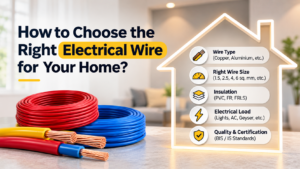
When building a new home or renovating an existing one, electrical wiring is one of the most important things to consider. While most homeowners spend time choosing lights, fans, switches and other electrical fittings, the wires behind the walls often receive less attention. However, they play a major role in keeping your home’s electrical system safe and reliable.
Choosing the wrong electrical wire can lead to problems such as overheating, frequent power interruptions and damaged appliances. On the other hand, the right wires, when installed correctly, help ensure a smooth and dependable power supply throughout your home.
With so many options available, selecting the right electrical wire can feel confusing. Let’s understand what you should look for before making a decision.
1. Understand the Different Types of Electrical Wires
The first step is to understand that not all electrical wires are the same. Different types are designed for different purposes, depending on the installation and electrical requirements.
Some commonly used options include:
Copper Wires: Copper wires are widely used in residential electrical installations because copper conducts electricity efficiently. They are also durable and flexible, making them suitable for different wiring applications.
Aluminium Wires: Aluminium wires are lighter than copper and are generally more economical. However, they need compatible connectors and proper installation because connections require special attention.
PVC Insulated Wires: These wires have a protective PVC layer that helps prevent direct contact with the conductor. They are commonly used in residential wiring because of their insulation properties and durability.
FR and FRLS Wires: FR stands for Fire Retardant, while FRLS stands for Fire Retardant Low Smoke. These wires are designed to offer specific fire-performance characteristics and may be suitable for installations where fire safety is an important consideration.
Before choosing any wire, consider where it will be used and what type of protection the installation requires.
2. Choose the Correct Wire Size
Wire size is another important factor that should never be overlooked. It determines how much electrical current a wire can safely carry under specific installation conditions.
For example, the wiring requirements of a bedroom light are different from those of an air conditioner or an electric geyser. Using a wire that is too small for the electrical load can cause excessive heating and damage its insulation.
Some commonly available wire sizes include 1.5 sq. mm, 2.5 sq. mm, 4 sq. mm and 6 sq. mm. However, the correct size depends on the appliance, connected load, cable length and installation conditions.
It is always better to get the wire size checked by a qualified electrician rather than choosing one based only on general recommendations.
3. Copper vs Aluminium: Which Wire Should You Choose?
One common question homeowners have is whether they should choose copper or aluminium wires.
Both materials have their own advantages, but they are not interchangeable in every situation.
Copper offers higher electrical conductivity and is commonly preferred for residential wiring. It is also suitable for many standard wiring applications and has well-established installation practices.
Aluminium, on the other hand, is lighter and generally costs less. It can be useful in certain electrical installations, provided the wiring system is designed for it and suitable connectors are used.
For most homeowners, the decision should be based on the electrical design, installation requirements and advice from a qualified electrician rather than price alone.
4. Pay Attention to Wire Insulation
The outer covering of an electrical wire is just as important as the conductor inside it. This covering is known as insulation, and it helps protect the conductor from accidental contact and electrical faults.
Different insulation materials are designed to handle different conditions. For example, PVC insulation is commonly used in residential wiring, while specialised insulation options may be required for particular operating temperatures or environments.
Before buying electrical wires, check whether the insulation is suitable for the place where the wire will be installed. Consider factors such as heat, moisture, fire performance and the possibility of physical damage.
Choosing suitable insulation helps improve the safety and reliability of your home’s electrical system.
5. Consider the Electrical Load of Your Home
Every home has different electricity requirements. A small apartment with basic appliances will have different wiring needs compared with a larger home that uses multiple air conditioners, geysers, washing machines and other high-power appliances.
Before selecting wires, consider the appliances you plan to use and their power ratings. Heavy electrical appliances may require separate circuits with appropriately sized wiring and protective devices.
For example, the wiring for a television or bedroom light should not automatically be treated as suitable for an air conditioner or geyser.
A proper electrical assessment helps determine the right wire size, circuit arrangement and safety protection for each area of your home.
6. Check Product Quality and Certifications
Electrical wires are products where quality should always come before a low price. Poor-quality wires may not provide the expected insulation, conductivity or durability.
Before purchasing, check the manufacturer’s details, conductor material, wire size and rated voltage. You should also look for applicable BIS certification and marking requirements.
In India, IS 694 is one of the relevant standards for certain PVC-insulated cables and flexible cords. Make sure the product meets the standard applicable to its intended use.
Buying from a reliable manufacturer or authorised supplier can also help you avoid products with unclear specifications or doubtful quality.
7. Avoid These Common Mistakes When Buying Electrical Wires
Even a small mistake during wire selection can create problems later. Here are a few things homeowners should avoid:
Choosing wires only because they are cheaper.
Ignoring the electrical load of appliances.
Buying wires without checking their specifications.
Using the same wire size for every electrical connection.
Overlooking insulation quality.
Ignoring proper earthing and circuit protection.
Purchasing products from unreliable sellers.
Taking a little extra time to check these details can help you make a better decision and avoid unnecessary electrical problems in the future.
8. Why Quality Electrical Wires Matter
Electrical wiring is usually hidden behind walls, ceilings and fittings, so problems may not be visible until something goes wrong. That is why choosing suitable wires at the beginning is so important.
Good-quality wires, when correctly selected and installed, support reliable electricity distribution, suitable insulation protection and long-term performance.
They also help reduce risks associated with poor-quality materials and unsuitable wiring. However, remember that even the best electrical wire cannot guarantee safety if it is incorrectly installed or connected.
Always ensure that your home’s wiring is planned and installed by a qualified professional.
Conclusion
Choosing the right electrical wire for your home does not have to be complicated. Start by understanding the different wire types, selecting the correct size and checking the insulation and product specifications. Also consider your home’s electrical load and the requirements of individual appliances.
Most importantly, do not make your decision based on price alone. Choose reliable products that meet the applicable standards and get professional advice before installation.
A properly planned electrical wiring system can make a significant difference to your home’s safety, reliability and everyday comfort.
Frequently Asked Questions
1. Which electrical wire is best for home wiring?
Copper wires are commonly preferred for residential wiring because of their good electrical conductivity and durability. However, the right choice depends on the electrical load and installation requirements.
2. What wire size is commonly used for home wiring?
Wire sizes such as 1.5 sq. mm, 2.5 sq. mm, 4 sq. mm and 6 sq. mm are commonly available. The correct size depends on the connected load, cable length and installation conditions.
3. Are FRLS wires suitable for home use?
FRLS wires may be considered for residential installations where reduced smoke generation and fire-retardant properties are important. Always check the product specifications and suitability for the intended application.
4. How can I identify good-quality electrical wires?
Check the manufacturer’s details, conductor material, wire size, insulation quality, rated voltage and applicable BIS certification or marking requirements.
5. Can the same electrical wire be used for all appliances?
No. Different appliances have different power requirements. Wire size and circuit arrangements should be selected according to the electrical load and applicable safety requirements.
6. Why is proper electrical wiring important?
Proper electrical wiring helps distribute electricity safely throughout your home. Suitable wires, correct installation, earthing and circuit protection help reduce the risk of overheating, electrical faults and equipment damage.